
Hail and windstorm coverage in Texas: the gap in most homeowners policies
Texas leads the nation in hail claims — and many homeowners don't find out their roof coverage is limited until after the storm. Here's what to check on your policy today.
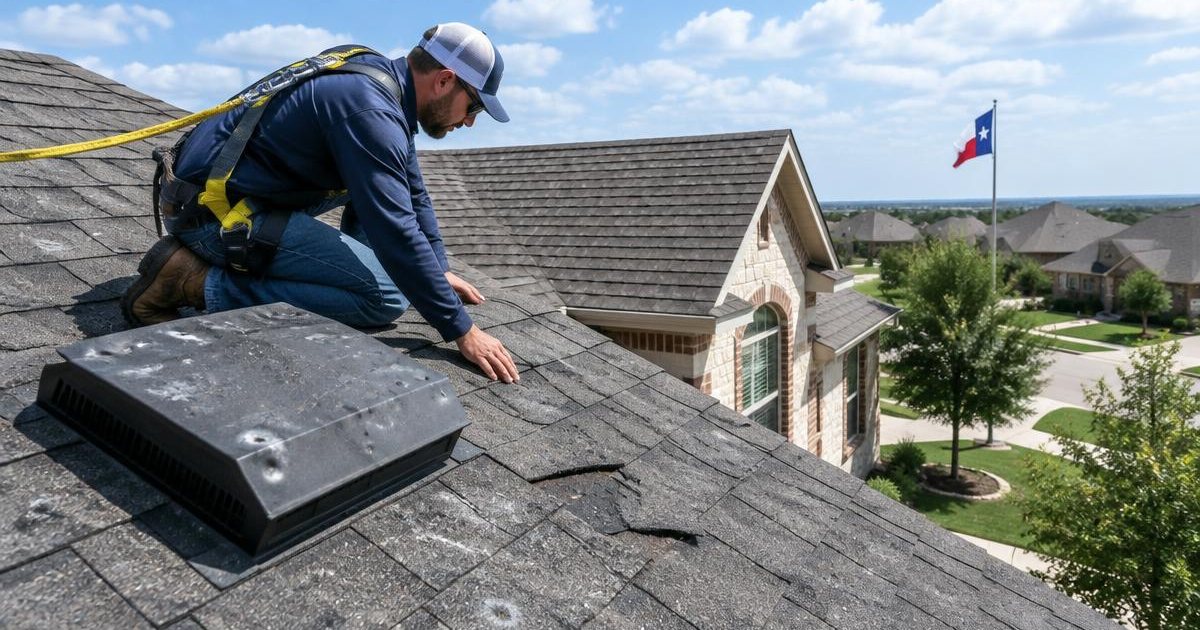
Texas hail is a when, not an if
Texas consistently leads the country in hail insurance claims, and the Dallas–Fort Worth metroplex, Austin corridor, and Hill Country sit in some of the most hail-prone territory in North America. The average roof replacement in Texas now runs $12,000 to $25,000+. Your homeowners policy is the only thing standing between you and that bill — if it's written correctly.
The three things to check on your policy right now
1. Your wind/hail deductible
Most Texas policies have a separate, higher deductible for wind and hail — usually 1% to 2% of your dwelling coverage amount, not a flat dollar figure. On a $400,000 home, a 2% wind/hail deductible means you pay the first $8,000 of a roof claim. Know your number before the storm, not after.
2. Replacement cost vs. actual cash value on the roof
This is the big one. Many Texas policies have quietly shifted roofs to actual cash value (ACV) or a roof payment schedule:
- Replacement cost pays what it costs to replace the roof today, minus your deductible.
- Actual cash value pays replacement cost minus depreciation. A 15-year-old roof might be depreciated 50% or more — meaning a $20,000 roof job gets you a check for $8,000 minus your deductible.
If your policy has a roof schedule or ACV roof endorsement, you need to know that now.
3. Cosmetic damage exclusions
Some policies exclude "cosmetic" hail damage to metal roofs, vents, and siding — damage that doesn't affect function. Insurers argue dented metal still works; buyers and appraisers disagree when you sell.
Coastal Texans: windstorm is a separate policy
If you're in a designated catastrophe area along the Gulf Coast, standard homeowners policies exclude wind and hail entirely. You buy windstorm coverage separately through the Texas Windstorm Insurance Association (TWIA) or a private carrier. If you have a mortgage, your lender requires it — but check that coverage limits have kept up with rebuilding costs.
After the storm: how to handle the claim
- Document everything — photos and video of all damage before any repairs.
- Mitigate further damage — tarp the roof; keep receipts. Your policy requires it and reimburses it.
- Be wary of storm-chasing roofers — never sign over your claim or let a roofer negotiate with your insurer on your behalf without reading what you're signing. Assignment-of-benefits abuse is rampant in Texas.
- Get your own estimate — you don't have to accept the first number the adjuster offers.
The bottom line
Pull out your declarations page and check three things: your wind/hail deductible percentage, whether your roof is replacement cost or ACV, and whether cosmetic damage is excluded. If you don't like what you find, that's a ten-minute conversation with an independent agent — and it's a lot cheaper to fix before the storm than after.