
Do I need commercial auto insurance in Texas?
When personal auto stops covering you, what commercial auto actually adds, and the common mistakes Texas business owners make with vehicles they use for work.
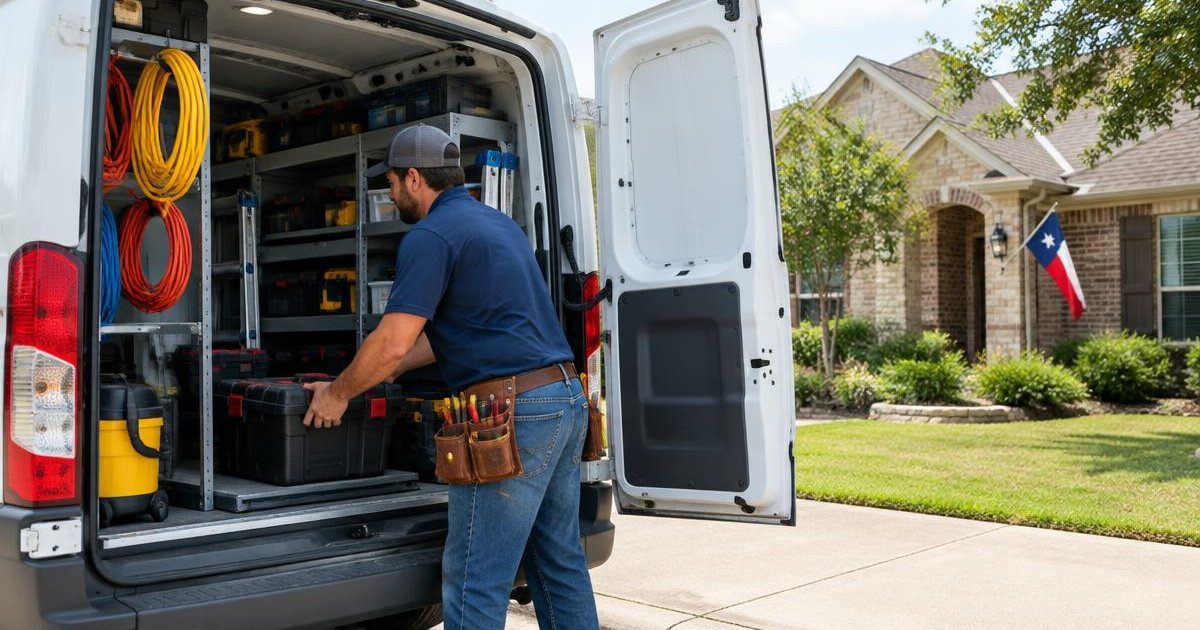
If you drive your own truck, van, or car for work in Texas, there's a real chance your personal auto policy will deny a claim the moment your insurer learns the loss happened on a job. It's one of the most common — and most expensive — coverage gaps we see.
This post is the plain-English version: when you need commercial auto, when you don't, and what it actually adds.
The simple test
Ask yourself three questions:
- Do I haul tools, equipment, materials, or product for a customer in this vehicle?
- Do I get paid to drive it (delivery, rideshare, on-site service calls)?
- Is the vehicle titled in a business name, or do I deduct mileage on a Schedule C / business return?
If the answer to any of these is yes, you almost certainly need a commercial auto policy or, at minimum, a business-use endorsement on your personal policy. Personal auto policies in Texas exclude most "business use" — and adjusters check.
What commercial auto actually covers
A commercial auto policy looks similar to a personal one but is priced and worded for business exposures:
- Liability (bodily injury and property damage). Pays when you're at fault for hurting someone or damaging their property. Most contracts and shippers in Texas require at least $1,000,000 combined single limit. Personal auto policies usually top out at $250K/$500K.
- Physical damage (comprehensive and collision). Repairs or replaces your vehicle after collision, theft, vandalism, hail, fire, or weather. Lenders financing the truck require it.
- Medical payments / Personal Injury Protection. Covers medical bills for you and your passengers regardless of fault.
- Uninsured/underinsured motorist. Critical in Texas, where ~20% of drivers are uninsured.
- Hired and non-owned auto. Covers you when an employee uses their own vehicle or a rented vehicle on company business — without this, you have a real exposure even if you don't own any company vehicles.
- Trailer interchange and cargo for haulers — see our Texas trucking insurance guide.
Examples we see weekly
- A handyman runs a stop sign on the way to a job in his own pickup loaded with tools. His personal carrier voids the claim because the vehicle was being used "in the course of business."
- A real estate agent t-bones another car driving a client to a showing. Personal auto pays the property damage but denies the bodily injury claim because client transport is considered business use.
- A landscape company has 4 employees driving 2 trucks. The owner had personal auto on both trucks "to save money." The first at-fault accident leaves the owner personally liable for everything above the personal-auto limits.
In all three, a properly-rated commercial auto policy would have paid the claim and protected the business.
What you don't necessarily need a separate commercial policy for
There are real edge cases. You generally don't need commercial auto if you:
- Drive to and from a single workplace and don't carry anything for a customer.
- Occasionally make a coffee run or a bank deposit for the business.
- Use the vehicle 100% personally and only commute.
If you're in one of these grey areas, you can sometimes add a business-use endorsement to a personal policy for a fraction of the cost of a full commercial policy. We can quote both ways and show you the difference.
What it costs in Texas
Commercial auto in Texas typically runs $1,800 – $3,200 per vehicle per year for a service-business pickup or van with $1M liability and full physical damage. Class 8 tractors and box trucks under interstate authority are priced as commercial trucking, which is a different (and higher) market — see the trucking guide for that.
Big drivers of price:
- Radius of operation. Local (under 50 mi) is far cheaper than long-haul.
- Driver MVRs. Even one moving violation or at-fault accident on a driver's record raises the rate for the whole policy.
- Use class. Service vehicle vs. delivery vs. for-hire vs. tow are all priced differently.
- Limits. $1M is the contract standard but $500K is sometimes acceptable for smaller operators.
- Loss history. A clean 3-year history is the single best lever you have.
When to call us
If you're starting a business, adding employees who'll drive, signing a new contract that requires a Certificate of Insurance, or you've been quietly running business miles on a personal auto policy — call us before the next claim, not after. We can review what you have, what you're exposed to, and quote the gap from multiple commercial carriers in one shot.
Get a commercial auto quote or contact us for a 10-minute review.